If you are thinking about selling in Big Pine Key, one question matters right away: will your home stand out in a market where buyers have choices and ask careful questions? That is the reality today. Sellers can still succeed here, but the best results usually come from smart pricing, strong preparation, and clean documentation. In a place where flood factors, permits, and waterfront details can shape buyer confidence, a little upfront work can make a big difference. Let’s dive in.
Price for today’s Big Pine Key market
Big Pine Key is not behaving like a fast, frenzy-style market right now. Recent market trackers point to longer days on market, more inventory, and sale prices that often land below asking.
Redfin reported a median sale price of $634,672 in April 2026, with 97 days on market and a 95.6% sale-to-list ratio. Realtor.com reported 134 homes for sale, about 75 days on market, and homes selling around 3% below asking in March 2026. Zillow reported a median list price of $817,583 and 99 active listings at the end of April 2026.
The numbers vary by source, but the message is consistent. Buyers are taking more time, comparing options, and negotiating. That means pricing too high at the start can cost you valuable momentum.
Why pricing discipline matters
When inventory rises and homes sit longer, buyers notice stale listings. A home that starts too high can end up chasing the market down with price cuts later.
In Big Pine Key, accurate pricing is not just about square footage and finishes. It can also depend on elevation, flood considerations, permit history, water access, and the condition of key exterior features. That is where local market knowledge matters.
Timing matters more than many sellers think
The calendar can affect your sale in the Lower Keys. NOAA says Atlantic hurricane season runs from June 1 through November 30, even though storms can happen outside that window.
For sellers, that means it often helps to complete repairs, yard cleanup, staging touches, photography, and permit-file organization before weather disruptions become more likely. If you wait too long, even simple prep tasks can become harder to schedule.
What to finish before listing
Try to complete these items before your home goes live:
- Exterior cleanup and debris removal
- Minor repairs that show up easily in photos or showings
- Interior decluttering and storage organization
- Professional photos
- Collection of permit and insurance documents
- Dock, lift, seawall, or shoreline records if applicable
In this market, preparation supports pricing. It also helps your home make a stronger first impression when buyers are comparing several properties.
Flood information is part of the value story
In Monroe County, flood questions are not a side topic. The county says all of Monroe County is in a floodplain or coastal floodplain, and standard homeowners insurance does not cover flood damage.
That is why buyers often want more than a simple flood-zone label. They may ask about elevation, prior claims, current flood insurance, and whether documents are available to help them understand future carrying costs.
Gather these documents early
Before listing, it helps to have these items ready:
- Current flood insurance policy
- Elevation Certificate, if one exists
- Flood claim history, if applicable
- Tax bill and tax disclosure information
- Records of sewer or utility repairs
- Permit history for major improvements
Florida law requires a flood disclosure for residential sales at or before contract execution. The disclosure includes whether you know of past flooding, flood claims, or FEMA assistance. Florida law also requires a property-tax disclosure summary and disclosure of known sanitary sewer lateral defects.
Having this information ready does two things. It keeps you organized for the transaction, and it helps buyers estimate ownership costs with fewer surprises.
Elevation and lower enclosures deserve careful attention
Many Big Pine Key homes have elevated construction, which makes lower-level areas a common point of buyer interest. Monroe County says structures built after December 31, 1974 must have the lowest floor elevated to or above base flood elevation.
The county also says enclosures below base flood elevation are limited to access, limited storage, and parking. If a lower enclosure was finished in a way that does not match the permit file, buyers may have questions about compliance and future use.
Be precise in how you describe downstairs space
This is one of the most important seller details in the Keys. If your home has a lower enclosure, describe it only as permitted access, limited storage, or parking unless the permit file clearly supports something else.
Monroe County announced in May 2026 that it removed the long-standing 299-square-foot limit for downstairs storage below elevated homes in unincorporated Monroe County. It also removed the inspection-at-sale requirement tied to that storage limitation. Even so, the real takeaway for sellers is simple: the permit record matters more than assumptions.
Waterfront features need documentation, not just photos
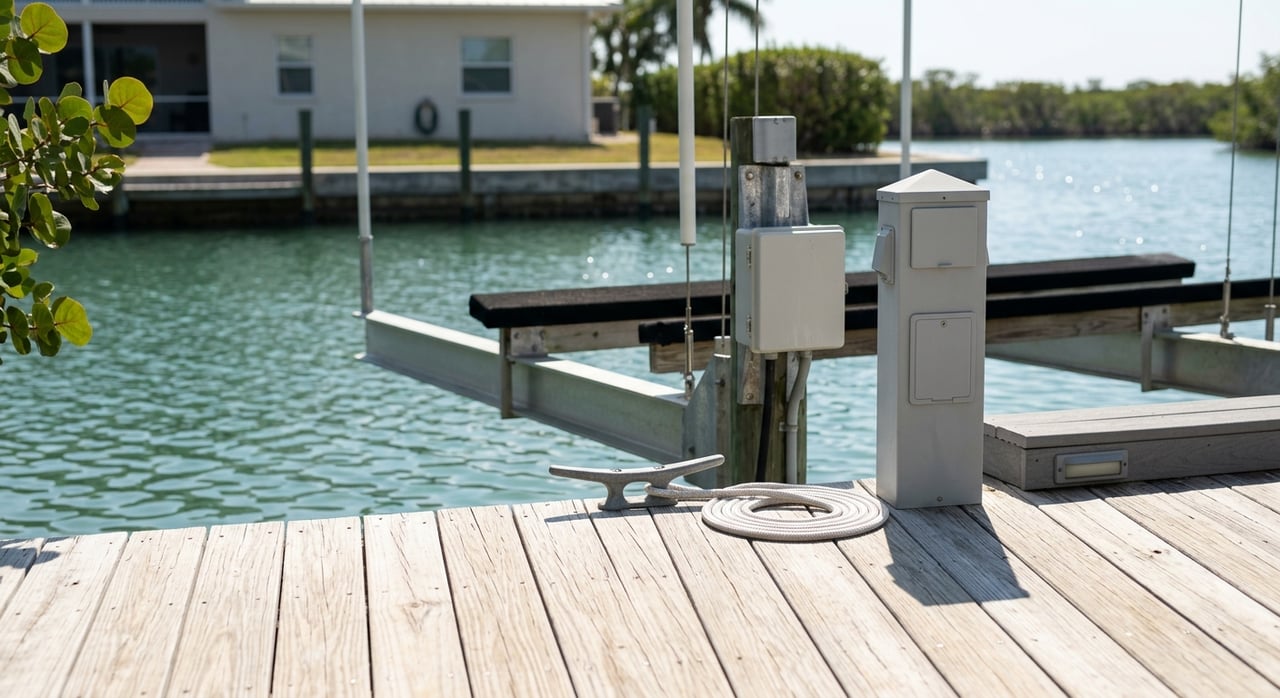
If your property has dockage, a boat lift, a seawall, or shoreline improvements, buyers will likely look beyond the marketing photos. Monroe County’s Marine Resources office manages boating and waterway infrastructure, and county permit records include specific permit types for residential dock, boat lift, and seawall work.
That means waterfront value is often strongest when you can clearly show what was done, when it was done, and whether approvals were issued. In Big Pine Key, a waterfront listing is more convincing when it is backed by records.
Build a waterfront listing packet
If your home has boating-related features, try to collect:
- Permit numbers
- Completion or final approval documents
- Maintenance records
- Seawall repair history
- Boat lift details
- Shoreline or dock improvement records
This is especially helpful in a market where buyers are cautious. Clear records can answer questions faster and support the value of your property’s water access and infrastructure.
Conservation and development context can affect buyer questions
Big Pine Key has a conservation-focused setting that can shape how buyers think about property use and future plans. The National Key Deer Refuge was created to protect Key deer and other wildlife resources, and Monroe County uses additional review processes in protected areas.
In May 2026, Monroe County said the Big Pine Key HCP had expired in 2023 and that the related ITP was set to expire on June 30, 2026, with permit reviews transitioning to the county PRP. If you are selling a lot, a property with redevelopment potential, or a home with unfinished improvements, buyers may ask how that affects future building options.
Focus on what is already known
You do not need to predict every future scenario for a buyer. What helps most is presenting the property clearly based on what is already permitted, built, and usable today.
That might include existing structures, approved improvements, flood and elevation documents, and any available permit records. Clear facts help buyers evaluate the property with more confidence.
Big Pine Key supply stays limited for a reason
Monroe County’s growth-control system helps explain why inventory in the Keys does not behave like many mainland markets. The county describes the Florida Keys as an Area of Critical State Concern, and its ROGO and NROGO framework ties permit allocation to hurricane evacuation capacity and environmental sensitivity.
Big Pine Key is also placed in the Tier II transition and sprawl-reduction area. For sellers, this does not automatically raise value on its own, but it does help explain why land use, permits, and legal improvements carry so much weight in buyer decision-making.
Presentation still matters in a document-heavy market
Even in a market shaped by flood zones and permits, presentation matters. Buyers still respond to clean spaces, bright photos, tidy outdoor areas, and a home that feels cared for.
The difference in Big Pine Key is that presentation works best when paired with substance. A polished listing gets attention, but good records help turn attention into offers.
Your pre-listing checklist
Before your home hits the market, review these basics:
- Price the home for current conditions, not last year’s headlines
- Finish visible repairs and cleanup
- Schedule photography before weather risks increase
- Gather flood, tax, and disclosure documents
- Review permit history for the home and any additions
- Confirm how lower enclosures should be described
- Organize dock, lift, seawall, and shoreline records
This kind of prep helps buyers feel informed. It can also reduce delays once negotiations begin.
Why local guidance matters in Big Pine Key
Selling here is different from selling in a typical inland market. Buyers often want answers about boating access, flood costs, elevation, permit history, and how a property functions day to day in island conditions.
That is why local experience can make the process smoother. When your pricing, marketing, and documentation strategy match how Big Pine Key buyers actually shop, your home is better positioned from day one.
If you are preparing to sell and want practical guidance on pricing, presentation, waterfront features, or permit-related questions, Anneliese Dietrick can help you build a smart listing plan for today’s Big Pine Key market.
FAQs
What should Big Pine Key sellers do before listing a home?
- Start with pricing, repairs, cleanup, photos, and document gathering, especially flood, permit, tax, and waterfront records.
What flood documents should a Big Pine Key seller have ready?
- Have your current flood policy, Elevation Certificate if available, flood claim history, and related repair or utility records ready for buyer review.
How should a Big Pine Key seller describe a lower enclosure?
- Describe a lower enclosure only as permitted access, limited storage, or parking unless the permit file clearly supports another use.
Do waterfront improvements matter when selling a Big Pine Key home?
- Yes. Dock, lift, seawall, and shoreline features often carry more value when you can show permit numbers, approvals, and maintenance history.
Is Big Pine Key a fast seller’s market right now?
- Recent market data suggests a slower, more negotiable market, so careful pricing and strong preparation are especially important.
